
Grupo Folklórico Huitzillin: Color, Movement, and the Stories That Keep Tradition Alive
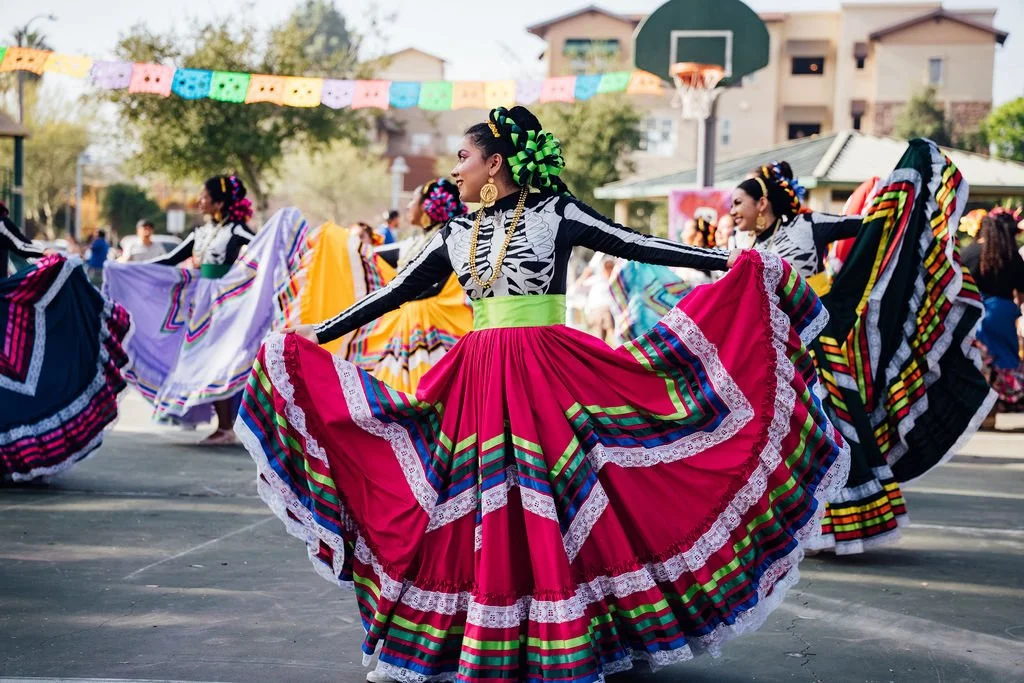
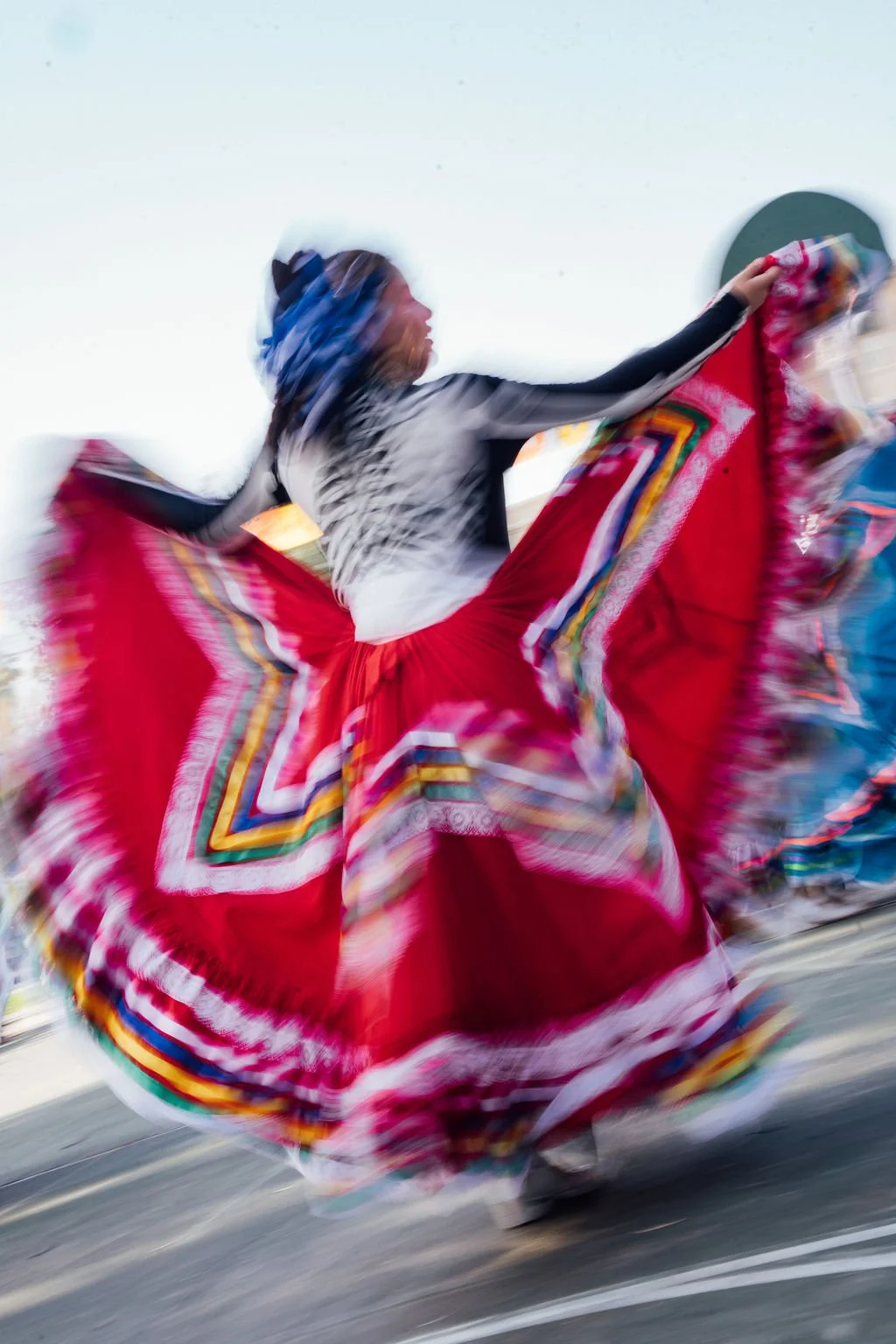
Bright florals. Swirling skirts. Gold rosaries catching the light. A sharp stomp of heels on the floor followed by a burst of joyful sound. When Grupo Folklórico Huitzillin dances, the room fills with color, history, and spirit.
For founder Diana Cabral, folklórico is much more than performance. It is a way to carry her culture forward, one generation at a time.
“Tradition to me is something that's very important and meaningful, that's passed on from generation to generation so that we keep the arts alive.”
Diana grew up watching folklórico through the eyes of someone in awe.
“As a child learning this tradition, I remember being in awe when seeing my uncle who was a master folklórico dancer, and I said, I got to learn this beautiful tradition and continue that tradition in my family.”
That inspiration eventually brought her to create a space where anyone could learn and participate.
“Grupo Folklórico Huitzillin is a community based dance group that I founded in 2019, and our doors are open to all ages.”
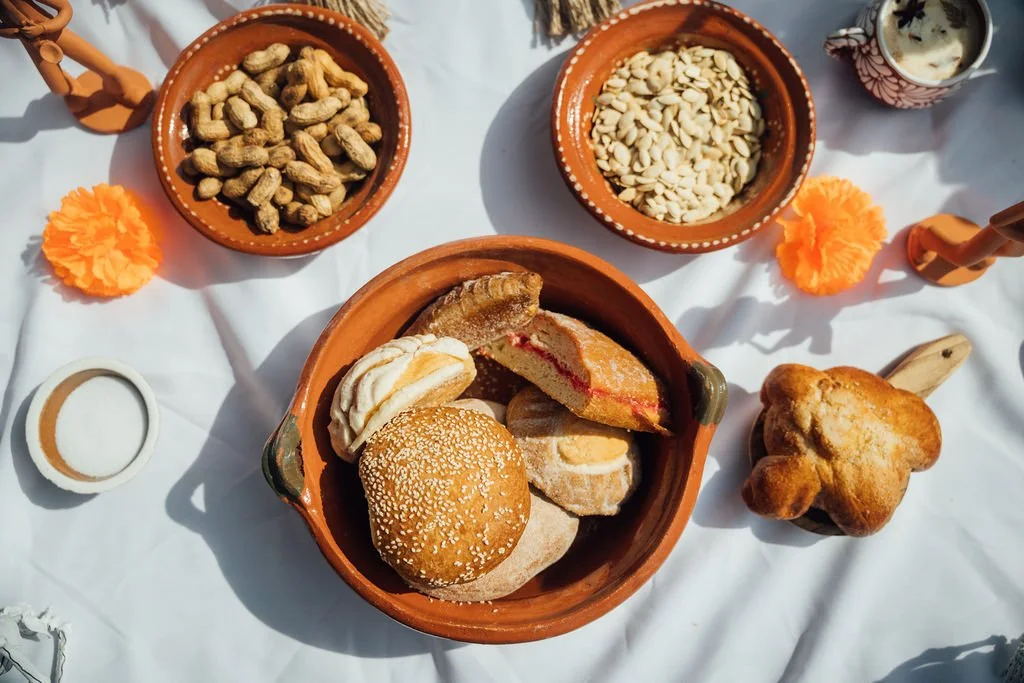
Every region of Mexico has its own stories, rhythms, and visual identity. Diana and her dancers work to honor each one.
“Here in the US, we do our best to represent the traditional dances of Mexico as best as possible.”
Their repertoire includes well known and deeply loved regions.
“Our group currently dances a few different regions from different states of Mexico, including Jalisco, Veracruz and Yucatán, to name a few.”
The attire tells as much of the story as the movement itself.
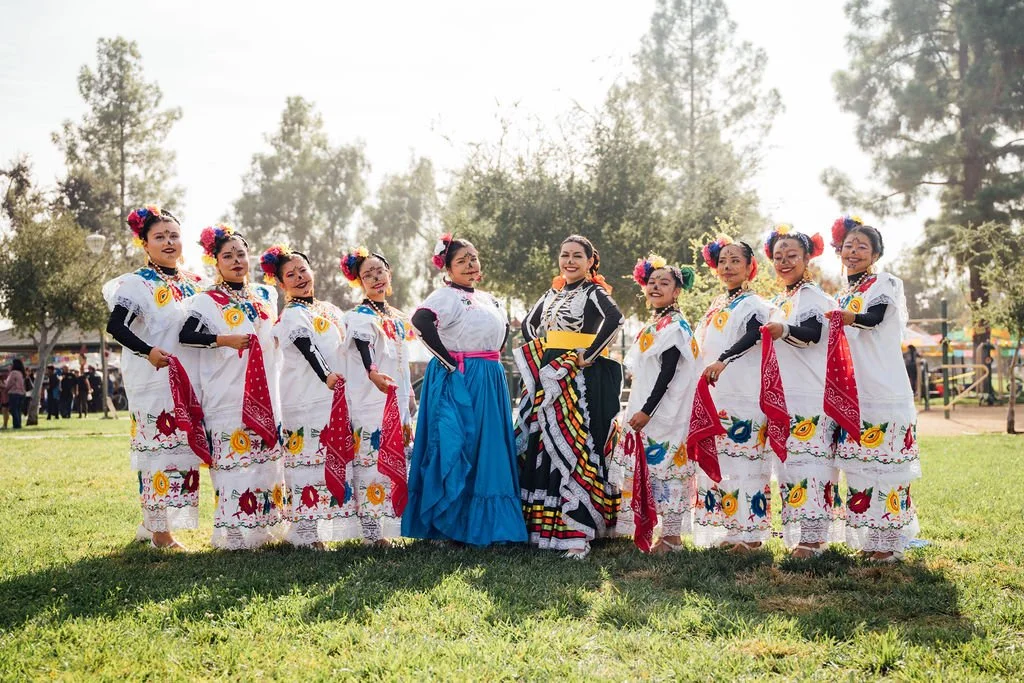
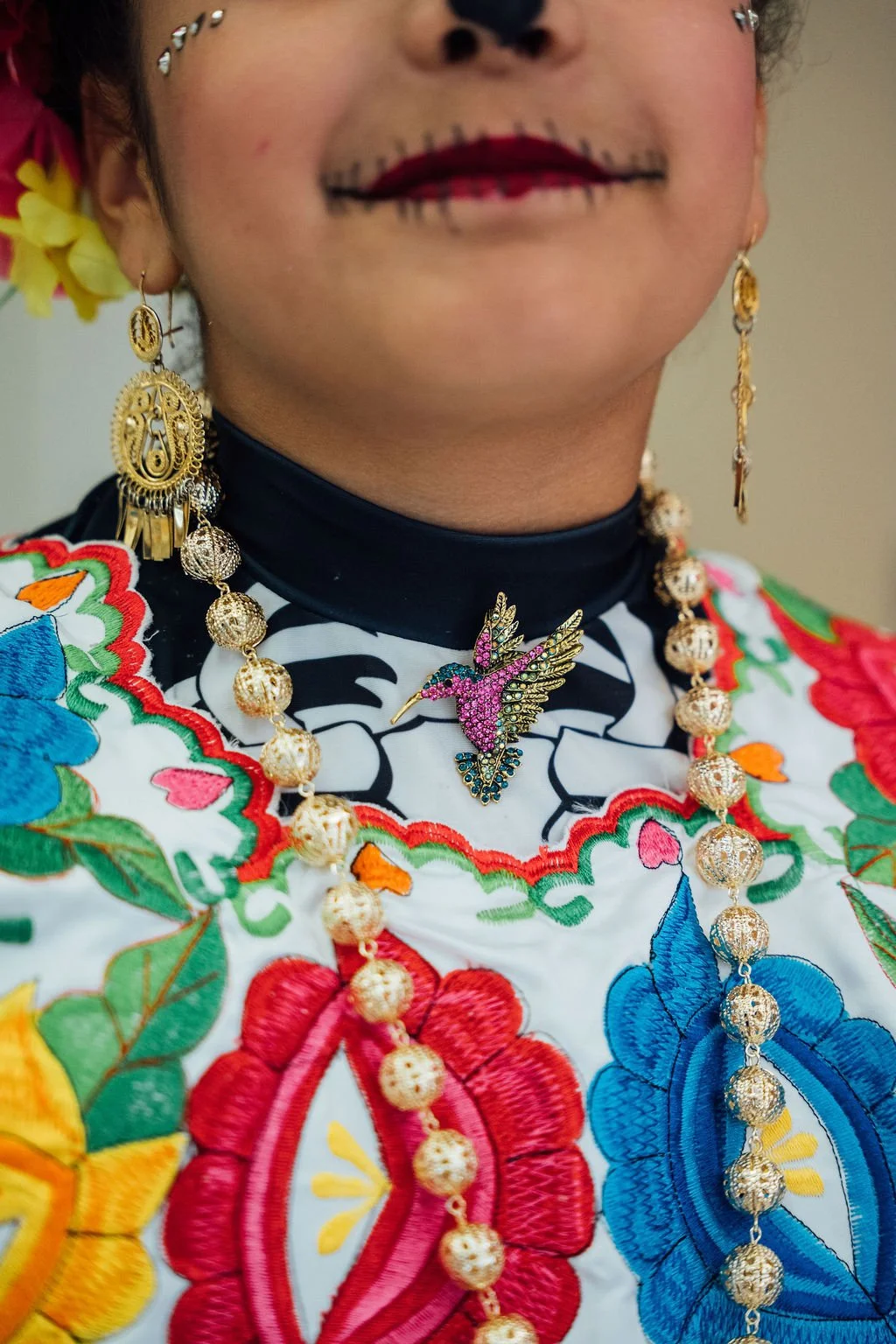
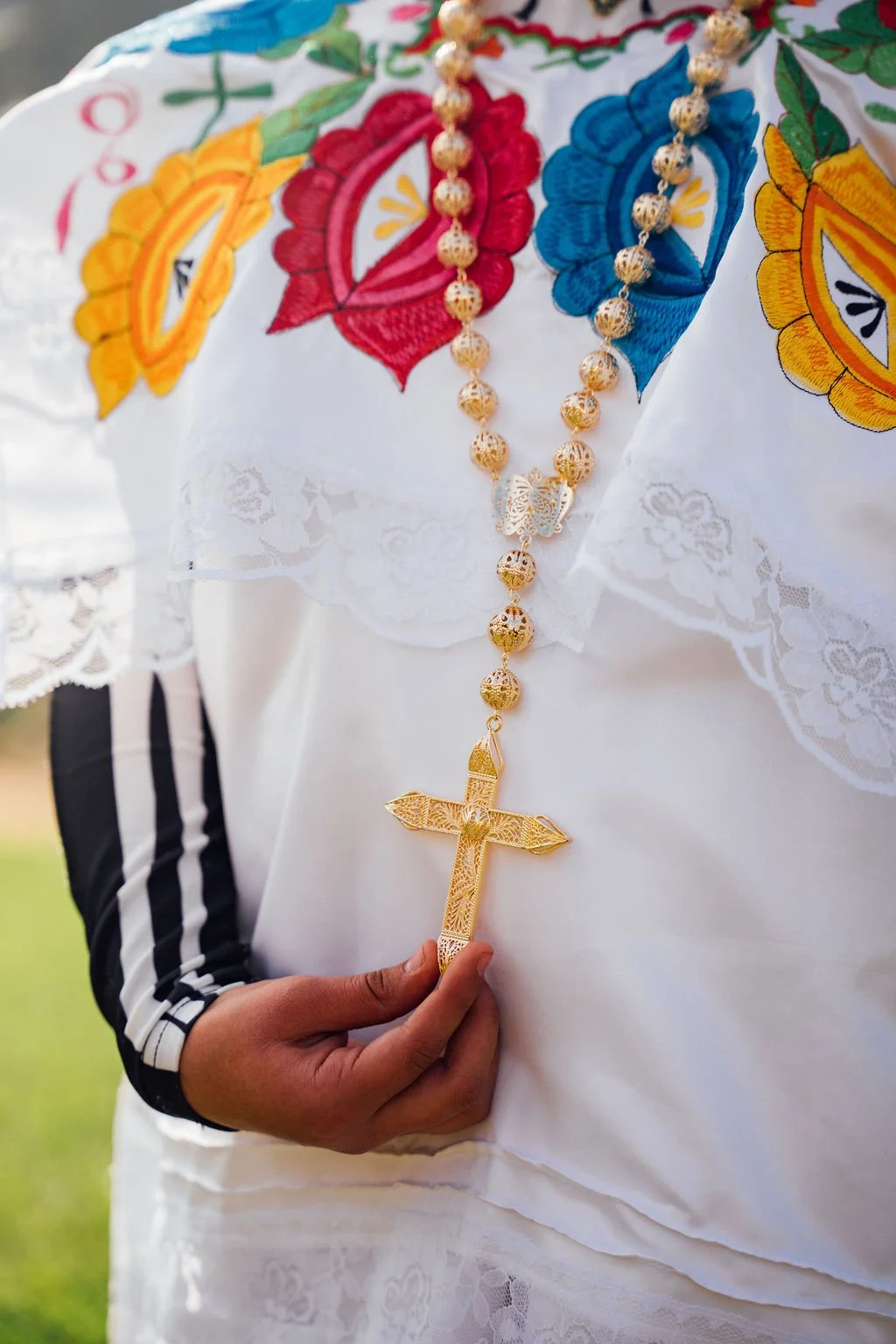
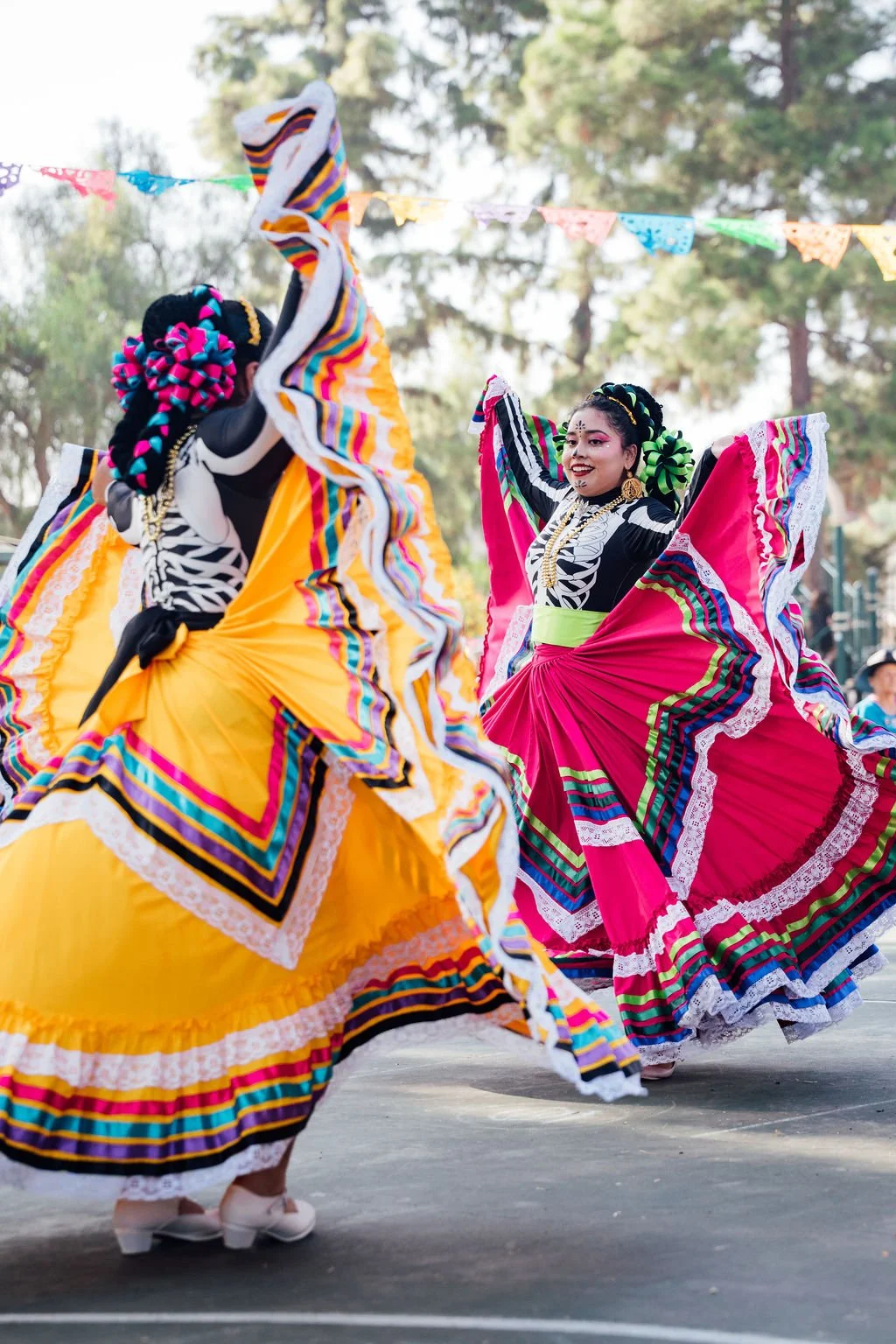
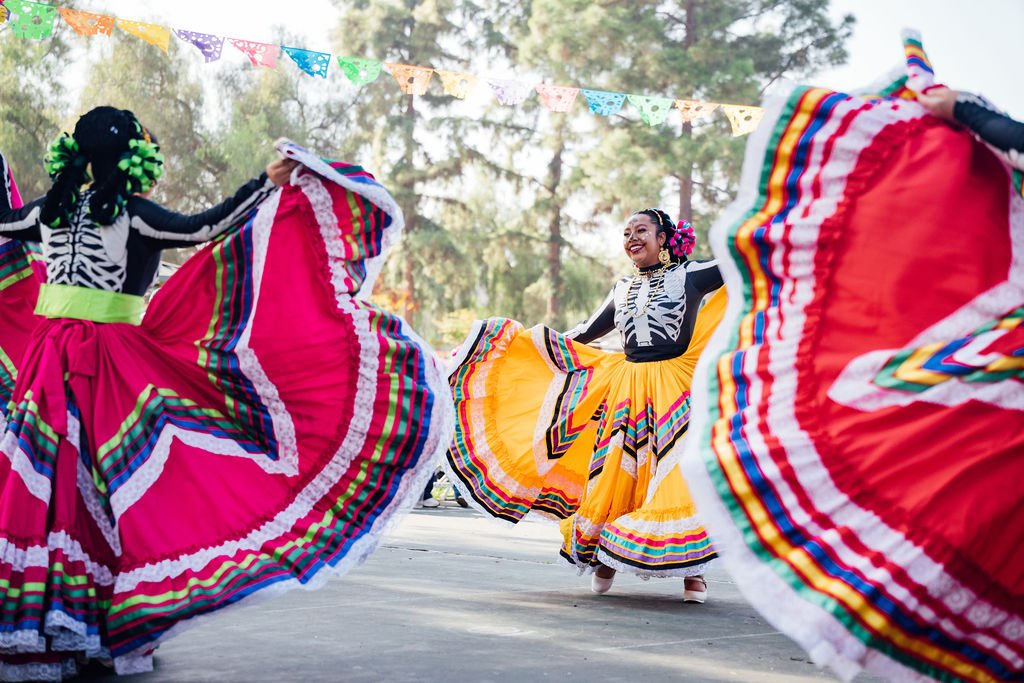
“The vestuario that we wear can vary from state to state. Today we dance the regions of Yucatán and Jalisco. For example Yucatán, it's a very vibrant flowers embroidered into the dress. We wear very tropical flowers in our hair and hair combs with a lot of sparkle. We wear white shoes and a gold rosary and gold earrings.”
Jalisco carries its own energy and color.
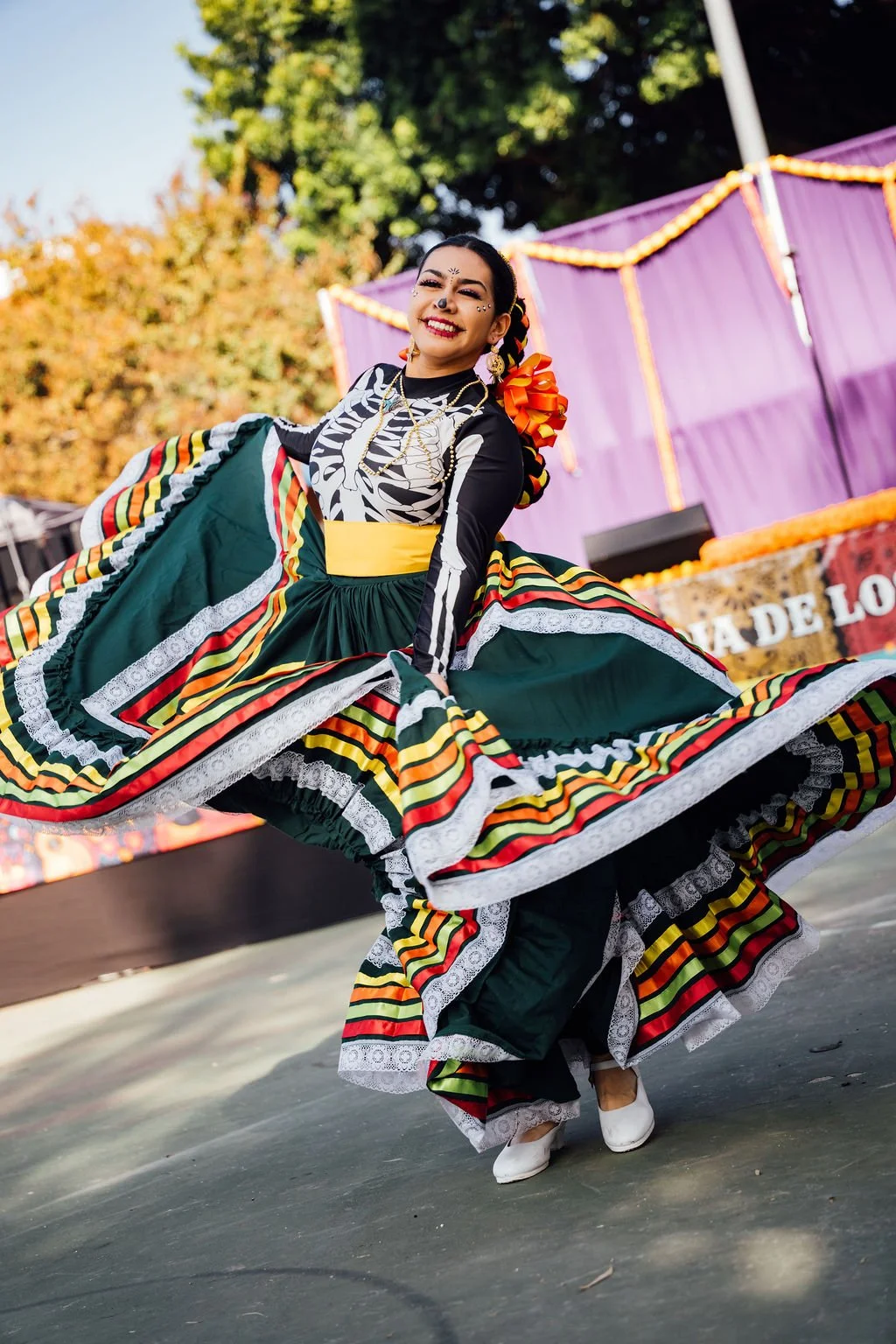
“For Day of the Dead we do wear like a skeleton leotard to go with the tradition of dressing like skeletons, but normally we wear a big skirt, a very high collar top with a lot of ribbons and a lot of colors so that we could do a lot of beautiful movement with our skirts.”
Even the makeup is intentional.
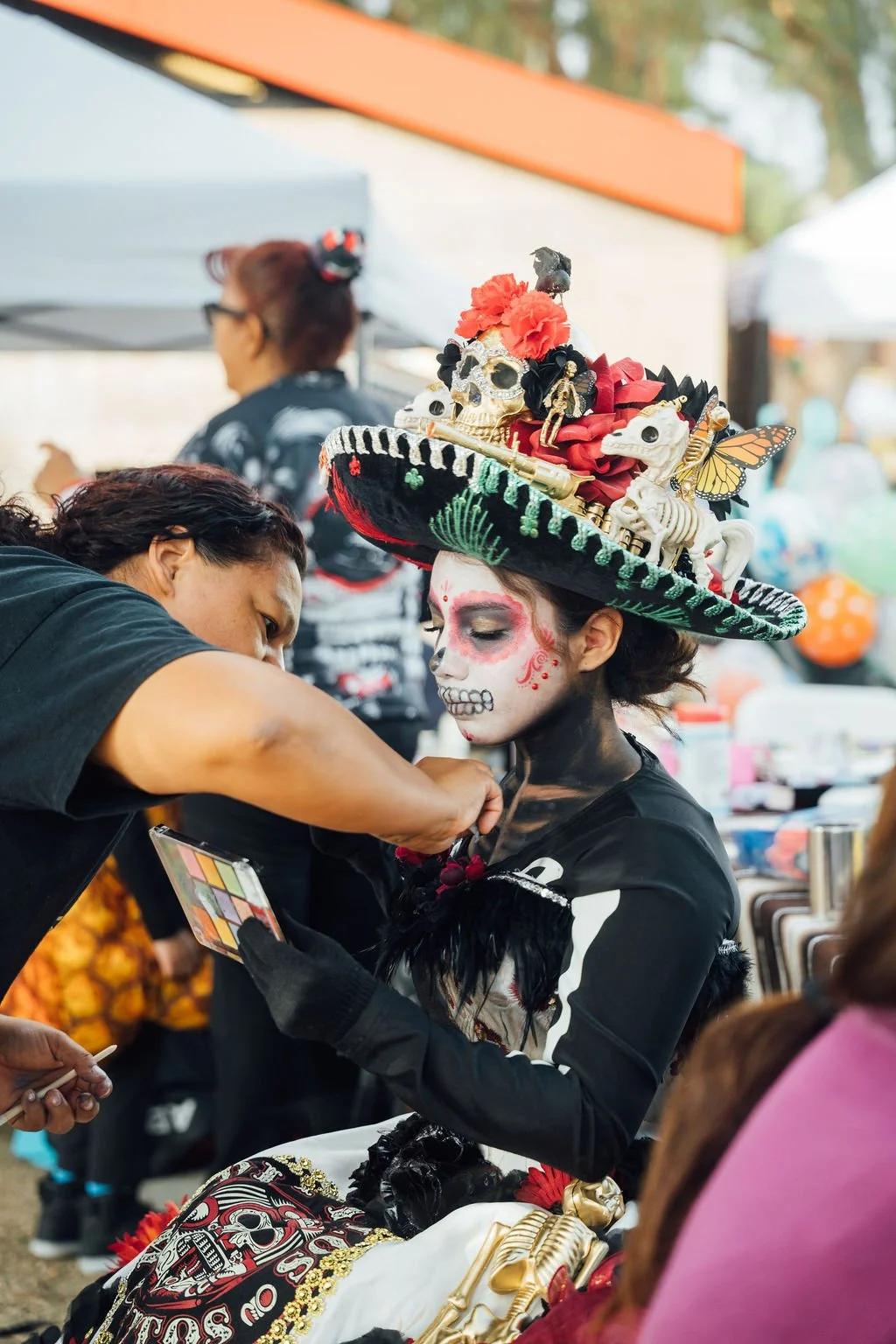
“The kind of makeup we wear for Day of the Dead performances is called sugar skull makeup.”
Folklórico is expressive, emotional, and loud in the best way.
“When we dance, it's passionate because it comes from the heart, and you'll often hear us do yells, which are called gritos or will say certain words. This is just another way that we let our passion, and I always encourage the audience to whistle or also do gritos.”
During Día de Muertos, these traditions take on even deeper meaning.
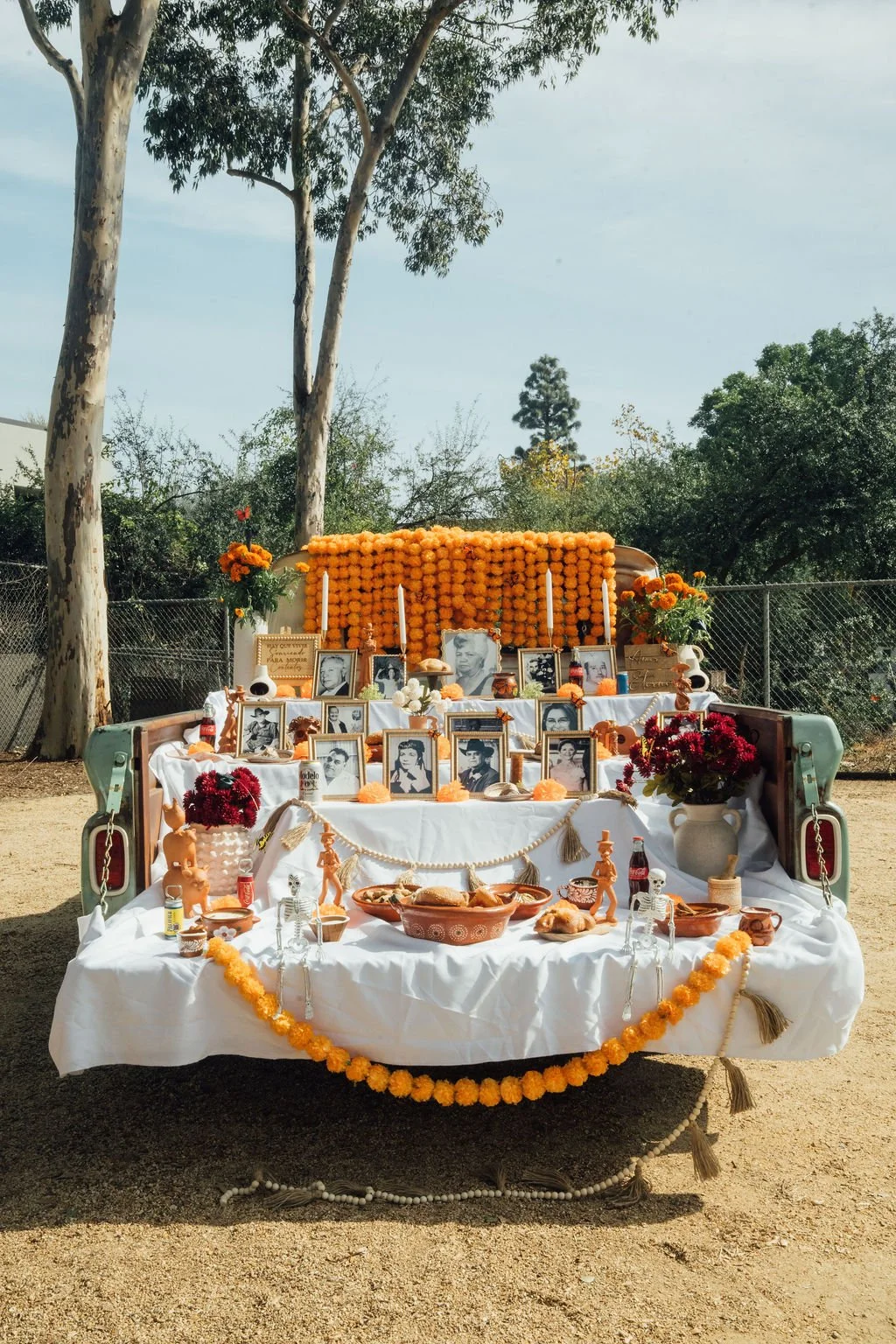
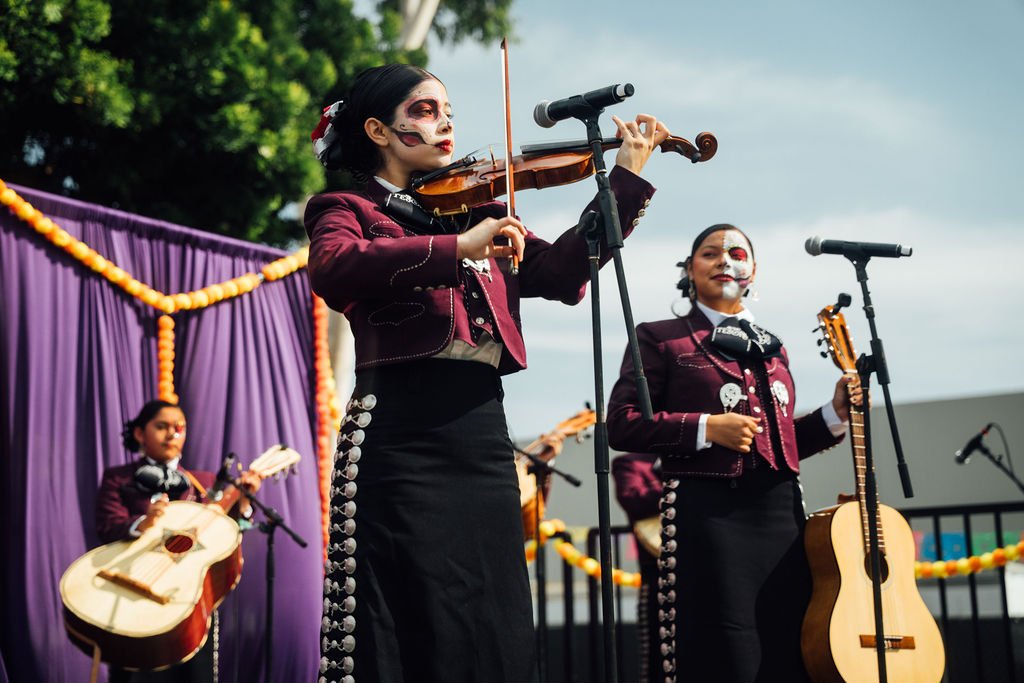
“Our group dances for many Day of the Dead events every year because it's a celebration and there can't be, in my opinion, a celebration without dancing.”
To Diana and the dancers, folklórico is a way to express their roots with pride.
In every step, every spin, every embroidered detail, there is love for the places and people that shaped them.
This story was created by Making Waves Project as part of Traditions: Stories We Keep, our series exploring the customs, rituals, and personal histories that connect us to our past and to each other. These stories remind us that tradition is alive and always evolving, shaped by the people who carry it forward.
By sharing these moments, we hope to honor the ways culture is passed down, reimagined, and kept alive, and to celebrate the roots that shape who we are today.
If you or someone you know has a tradition that deserves to be part of Making Waves Project, we would love to hear from you. And if you are a brand interested in partnering with us to help tell more stories like this, reach out at hello@makingwavesproject.com.
Follow along with Traditions: Stories We Keep on our Instagram and YouTube, and explore new stories at makingwavesproject.com/stories.
Photography by Robiee Ziegler
Produced by Katie Caro
Post Production by Kelly Budish
