
Healing Sex, Reclaiming Pleasure: Inside the World of Sex Scholar Nadège
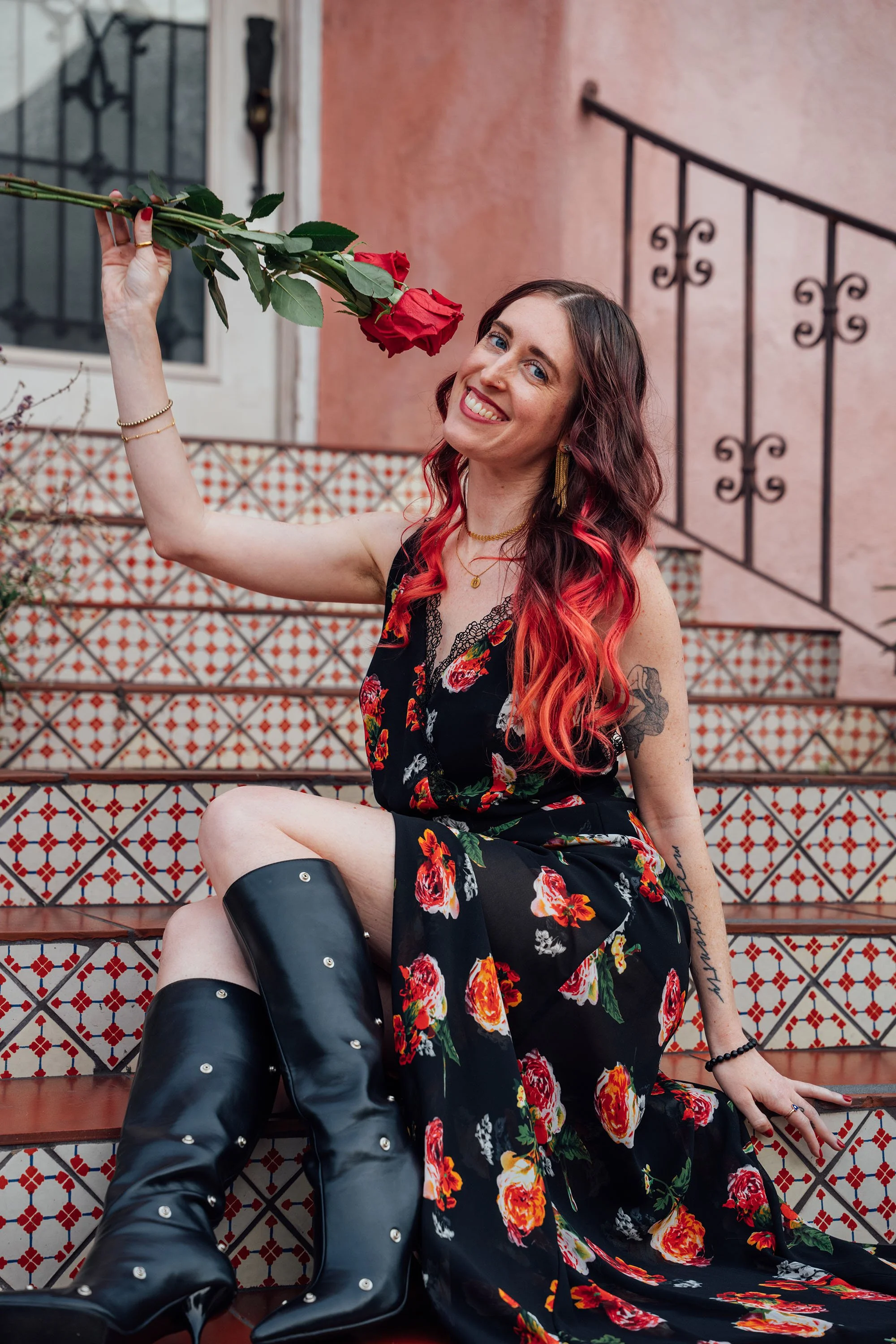
More than a decade ago, Nadège made a decision that would alter the course of her life. “I became a sex scholar because I didn’t like sex.” It’s not the origin story most people expect from someone who now speaks unapologetically about pleasure, orgasm, and sexual liberation on stages around the world. But for her, it was honest. Sex felt confusing. It felt frustrating. It felt disconnected from the effortless narrative everyone else seemed to be living. Instead of quietly accepting that, she chose something radical. “I refuse this reality.”
At the time, she was a student at UC Berkeley, studying English and dating men who left her feeling small. She remembers the turning point clearly. “I’m paying to go to Berkeley and I am not enjoying my degree. I’m dating people who make me feel like shit and I can’t come and I refuse this reality.” She discovered Berkeley housed one of the strongest gender, women’s studies, and sexology programs in the world. Even when she was told she couldn’t switch majors, she pushed back. “I refuse the reality that you’re giving me and this is my life.” When her transcript was reviewed, it became clear she had already been gravitating toward sex, gender, and feminist studies for years. The pivot wasn’t impulsive. It was aligned.
Her initial motivation was deeply personal. “I had a really hard time having orgasms with people who weren’t me. I could do it by myself, but the second another person was around, it was a completely different ball game.” She sought help from doctors and therapists, only to discover a shocking truth. “Your gynecologist, your urologist, even your doctor and therapist have no sex ed training at all.” The problem wasn’t her body. The problem was the cultural ignorance surrounding sex itself.
One of the foundational myths she now works to dismantle is the idea that sex is primarily about reproduction. “Sex is not a reproductive behavior. It is a social behavior.” When sex is defined only through penetration and procreation, pleasure narrows and pressure builds. But when sex is understood as connection and embodied experience, it expands. Nadège teaches that the entire body holds erotic potential. “Any area of the body that folds is an erogenous zone.” The clitoris extends internally. The feet contain more nerve endings than the penis. Full-body orgasms are possible through breath and mental stimulation alone. Even more liberating, orgasm and ejaculation are not the same thing. “These are two completely different functions. They just happen to happen at the same time.” That distinction alone reframes performance anxiety for countless men and couples.
Yet for all the science, so much of her work returns to something deeply human: shame. “It’s usually the first lesson people learn with sex.” Across genders and identities, she sees the same thread. Too much sex is shameful. Not enough sex is shameful. Desire is humiliating. Lack of desire is embarrassing. And shame doesn’t just live in the mind. It embeds itself in the nervous system. “What you don’t say blocks your orgasmic potential.” Unspoken needs, unexpressed boundaries, years of people pleasing. These show up in the bedroom whether we acknowledge them or not.
Her own healing required confronting the ways she had silenced herself. She once described herself as a people pleaser, later reframing it as “a manipulative liar.” By shapeshifting to be what others wanted, she was abandoning herself. As she began practicing full self-expression in her everyday life, her sexual experiences transformed. Now she teaches clients practical tools for sexual communication, including the importance of tone, timing, and turf when discussing intimacy. “Name it to tame it,” she says, encouraging people to voice their fear or nervousness before diving into vulnerable conversations.
As the founder of Pleasure Science, Nadège works with individuals and high-powered couples who want to deepen intimacy and reconnect to pleasure. She often challenges couples to temporarily remove penetration from the equation to expand their understanding of what sex can be. “Flirting is life force energy,” she reminds them. When couples stop flirting, they often stop seeing each other.
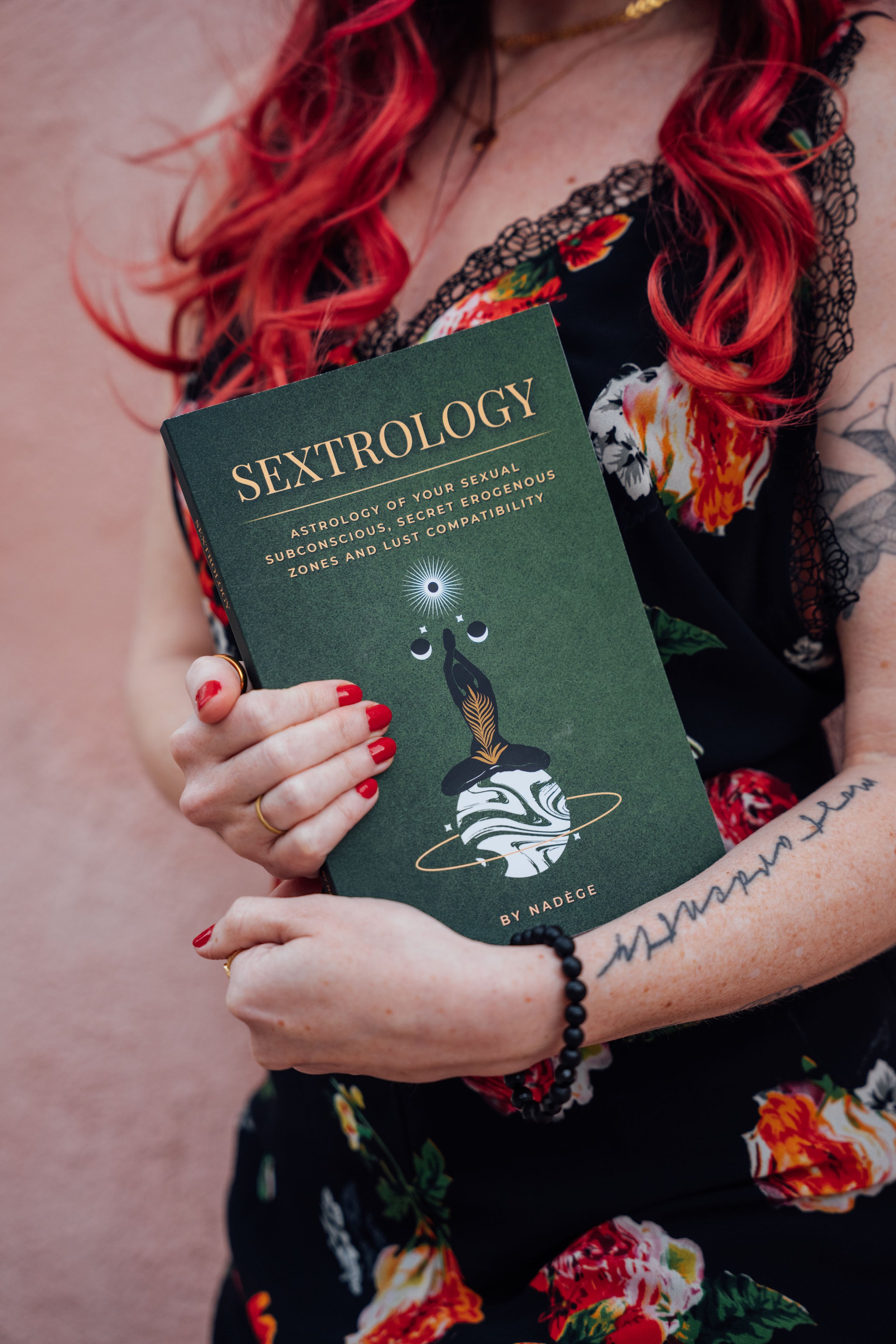
Her work extends beyond private sessions. In her book Sextrology, she merges sex, neuroscience, psychology, and astrology to help readers better understand their erotic identity. On the Pleasure Science Podcast, she speaks openly about orgasm science, sexual empowerment, and the realities of healing trauma without pausing life.
When asked how she makes waves, she answers simply. “I really make waves by going into anywhere that I’m invited and unapologetically talking about sex.” And on a personal level, it’s even more direct. “My commitment to myself is being fully self-expressed.”
In a culture that profits from sexual shame, Nadège’s work feels both disruptive and restorative. She is not selling shock value. She is offering literacy, steadiness, and permission to feel good in your body. Sexual liberation, in her world, is not rebellion for rebellion’s sake. It is a return to yourself.
Learn more about Nadège and her work at https://pleasurescience.com
Follow her on Instagram at https://instagram.com/pleasurescience
This story was created by Making Waves Project as part of Ways We Love, our February series exploring the many forms love takes in our lives. From romantic and platonic relationships to self-love, care, intimacy, and connection, these stories highlight how love is practiced, learned, and expressed in deeply personal ways.
Through these conversations, we hope to expand the definition of love beyond expectation and highlight the ways it shows up in everyday moments, relationships, and choices. Love is not one thing, and it looks different for everyone. These stories invite us to slow down, listen closely, and reflect on how we give and receive it.
If you or someone you know has a story about love that deserves to be shared, we would love to hear from you. And if you are a brand interested in partnering with us to help tell more stories like this, reach out at hello@makingwavesproject.com.
Follow along with Ways We Love on our Instagram and YouTube, and explore more stories at makingwavesproject.com/stories.
Photography by Robiee Ziegler
Produced by Katie Caro
